Singapore shouldn’t work. A tiny island city-state with no natural resources, wedged between Malaysia and Indonesia, that has somehow become one of the wealthiest, cleanest, and most efficient places on earth. Also known as The Lion City, Singapore is a place where futuristic architecture rises above ancient temples, where the food is extraordinary at every price point, and where four distinct cultures — Chinese, Malay, Indian, and Western — coexist in a way that feels genuinely harmonious. It’s one of the most fascinating cities in Asia, and one of the easiest to visit.
The Iconic Skyline
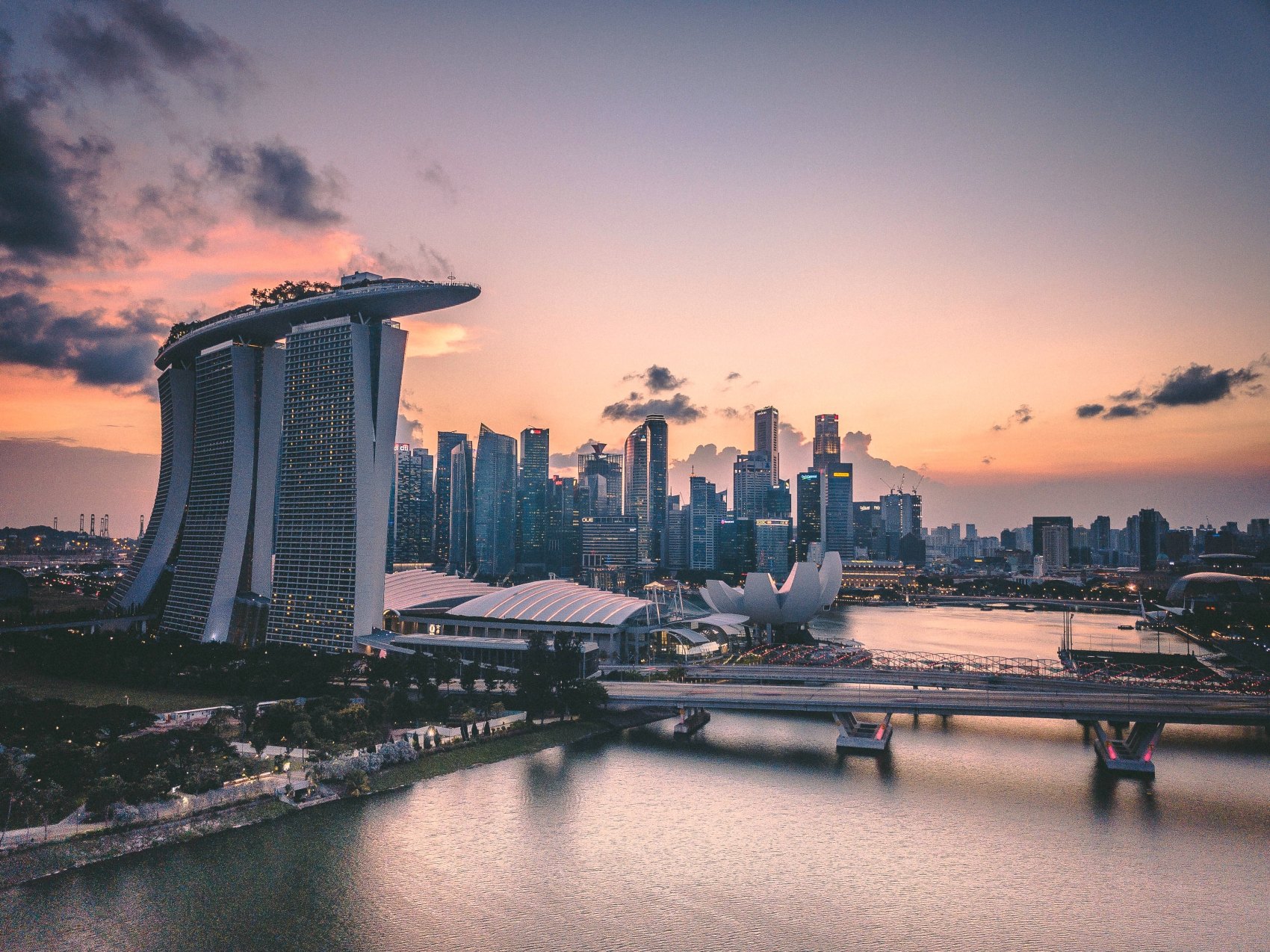
No image of Singapore is more recognizable than Marina Bay Sands — the three-tower hotel complex topped by a sky park that stretches across all three buildings like a surfboard balanced on stilts. The rooftop infinity pool is one of the most photographed spots in Asia, and the view from the observation deck over the bay and the city is extraordinary, especially at night.
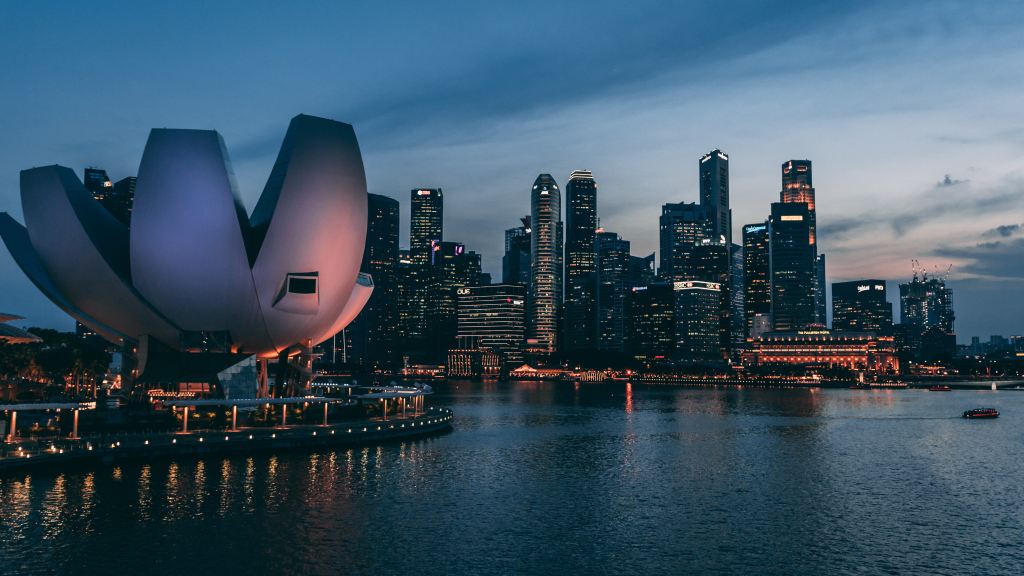
Below it, Marina Bay itself is the heart of modern Singapore — a waterfront promenade lined with the city’s most dramatic architecture, culminating at the Merlion, the half-lion half-fish statue that has been the symbol of Singapore since 1972. The nightly light show over the bay is spectacular.
The Singapore Flyer, one of the world’s largest observation wheels, offers another perspective on the city — slow, sweeping, and particularly beautiful at sunset when the skyline turns gold.
Gardens by the Bay
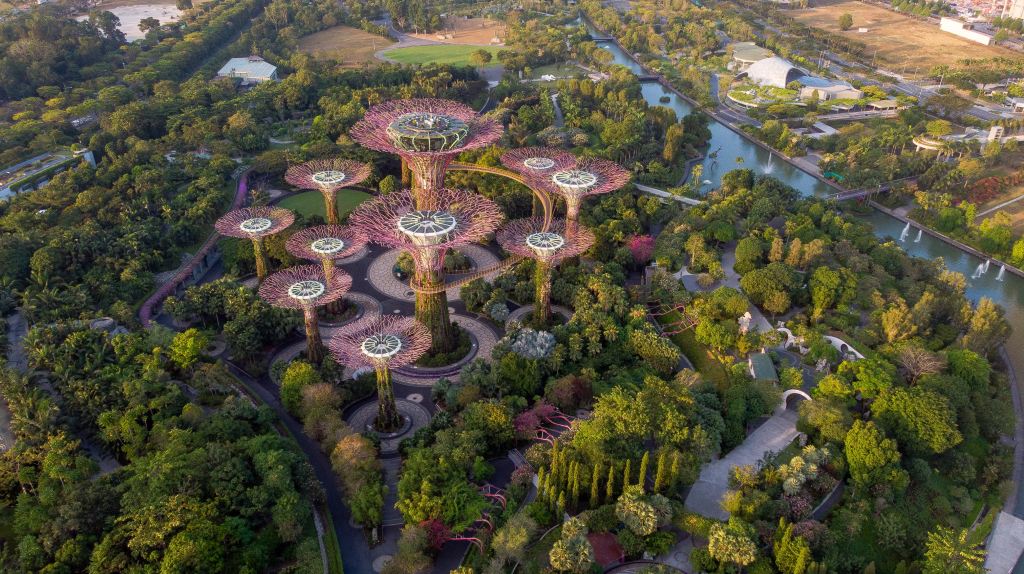
Just behind Marina Bay Sands, Gardens by the Bay is one of the most extraordinary public spaces in the world — a 101-hectare nature park that blends horticulture and technology in ways that feel genuinely futuristic.
The Supertree Grove is the centerpiece — 18 tree-like vertical gardens that tower up to 50 metres and come alive at night with a sound and light show that’s become one of Singapore’s most beloved experiences. The Flower Dome and Cloud Forest are two climate-controlled conservatories that house plant collections from around the world — the Cloud Forest, with its 35-metre indoor waterfall, is particularly spectacular. Entry to the park itself is free; the conservatories require tickets.
Food: The National Obsession
Singaporeans talk about food the way other cities talk about sport, and with good reason. The hawker centre is Singapore’s greatest culinary institution — an open-air complex of food stalls where dishes from Chinese, Malay, Indian, and Peranakan traditions are served at extraordinary quality for a few dollars. Maxwell Food Centre and Lau Pa Sat are two of the most famous, but almost any hawker centre in the city will reward you.
The classics are non-negotiable: Hainanese chicken rice, chilli crab, laksa, char kway teow, and kaya toast with soft-boiled eggs for breakfast. Singapore has more Michelin stars per capita than almost any other city in the world, including a hawker stall — Liao Fan Hawker Chan — that became the world’s first street food stall to receive a Michelin star.
The Cultural Neighbourhoods
Singapore’s diversity is most visible in its historic neighbourhoods, each of which preserves a distinct cultural identity that has survived the city’s rapid modernisation.
Chinatown is the oldest and most atmospheric — ornate temples, traditional medicine shops, street food stalls, and the Sri Mariamman Temple, the oldest Hindu temple in Singapore, all packed into a compact grid of shophouse-lined streets. Little India, to the north, is a riot of colour and fragrance — flower garlands, sari shops, the golden gopuram of the Sri Veeramakaliamman Temple, and the best banana leaf rice you’ll find outside Chennai. Kampong Glam is the Malay and Arab quarter, centred on the golden dome of the Sultan Mosque, with the colourful shophouses of Haji Lane running just behind it.
Haji Lane deserves a mention of its own — a narrow street of pastel-coloured buildings painted with murals, lined with independent boutiques and cafés. It’s the most photographed street in Singapore and one of the most charming.
The Civic District and Bras Basah-Bugis area is Singapore’s cultural and institutional heart — a cluster of colonial-era buildings, museums, and arts spaces that tell the story of the city’s past. The National Museum of Singapore is the oldest and most comprehensive, covering the full sweep of Singaporean history from early trading port to modern metropolis. The Singapore Art Museum focuses on contemporary Southeast Asian art, while the Asian Civilisations Museum explores the broader cultural heritage of Asia through an outstanding collection of artefacts. All three are within walking distance of each other and make for a rewarding half-day.
Shopping & Nightlife
Orchard Road is Singapore’s shopping boulevard — a long stretch of malls, flagship stores, and luxury boutiques that draws shoppers from across Southeast Asia. It’s not just about the shopping; the street itself, lined with trees and decorated elaborately during the festive seasons, is worth a walk.
For nightlife, Clarke Quay on the Singapore River is the city’s most popular entertainment district — converted warehouses and shophouses turned into bars, clubs, and restaurants along a stretch of riverside that buzzes every night of the week. It’s a great place to end an evening in Singapore.
Nature & Wildlife
Singapore takes its green spaces seriously. The Singapore Botanic Gardens, a UNESCO World Heritage Site, is a 160-year-old tropical garden in the heart of the city — the National Orchid Garden within it houses the world’s largest display of tropical orchids and is the most visited attraction in Singapore.
The Singapore Zoo is consistently rated one of the best in the world for its open, naturalistic enclosures. The Night Safari next door is a unique experience — a guided tram ride through a rainforest habitat after dark, watching nocturnal animals go about their lives in conditions as close to the wild as a zoo can achieve.
Sentosa Island
Connected to the mainland by a short cable car or bridge, Sentosa Island is Singapore’s resort destination — beaches, hotels, theme parks, and entertainment all in one place. Universal Studios Singapore is the main draw, with rides and attractions spread across themed zones. The beaches — Siloso, Palawan, and Tanjong — are artificial but well-maintained, and the cable car ride across offers great views of the harbour.
Beyond the City
One of the great surprises of Singapore is Jewel Changi Airport — officially part of the airport but really a destination in its own right. The world’s tallest indoor waterfall, the HSBC Rain Vortex, drops 40 metres through the centre of a glass dome surrounded by five floors of retail, restaurants, and gardens. Even if you’re not flying, it’s worth the trip.
And every September, Singapore hosts one of the most spectacular rounds of the Formula 1 World Championship — the Singapore Grand Prix. The Marina Bay Street Circuit is the only night race on the F1 calendar, with the cars racing past the illuminated skyline in one of the most visually stunning settings in world motorsport.
The Lion City
Singapore is a city that rewards curiosity. The more you look, the more you find — in the food, in the architecture, in the cultural layers that sit just beneath the gleaming surface. It’s one of the safest, most efficient, and most surprising cities in the world.
Once you’ve decided it’s time to go, check out our practical guide for everything you need to know before you land.
Have a nice trip!!! 🙂



Leave a comment